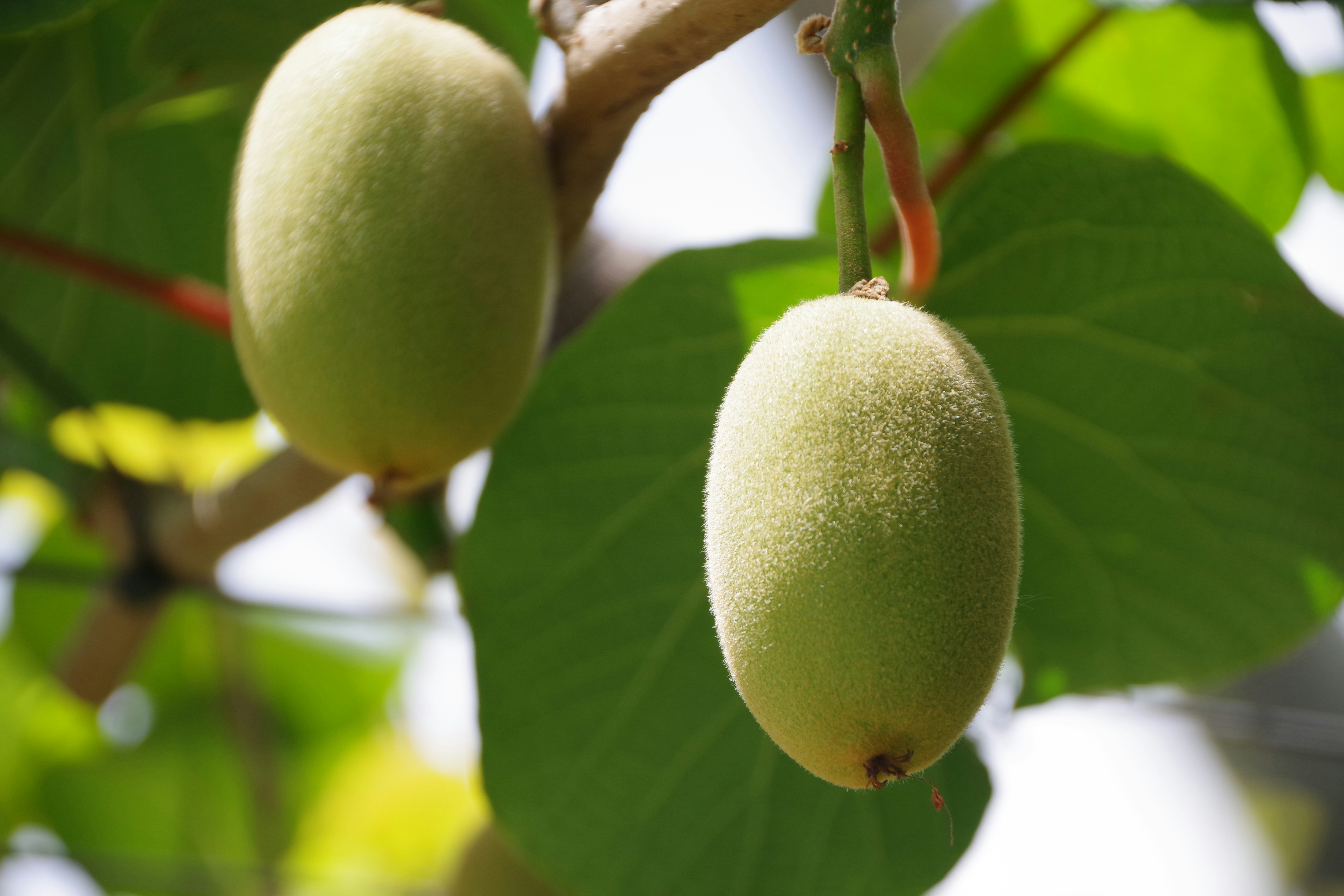
Hardy Kiwi
Actinidia arguta
Plant out 4 weeks before your last spring frost. Space plants 192 in (488 cm) apart.
Photo: DD Wido on Unsplash, Unsplash License · source
When to plant
Timed from your frost dates, so it holds wherever you garden. Give yours and every step below becomes a date.
Optimal Spring Transplant
From a plantRecommended- Plant out4 weeks before your last spring frost
- First harvestearly to mid-fall; the first crop about 4 years after planting
Optimal Fall Transplant
From a plant- Plant out6 weeks before your first fall frost
- First harvestearly to mid-fall; the first crop about 4 years after planting
Growing hardy kiwi
- Spacing in the row
- 192 in (488 cm)
- Between rows
- 144 in (366 cm)
- Planting depth
- Plant at same depth as in nursery or with crown slightly below soil surface for bare-root.
- Sun
- Full Sun to Partial Shade
- Soil
- Well-drained, fertile loam; pH balanced (5.5-7.0 optimal).
- Germination
- 30-60 days (after stratification) at 65-75°F (after stratification)
- Harvest season
- Early to mid-fall
- Years to first crop
- 4
- Mature height
- 25-30 feet (vine length; trained on a 6 ft wire)
- Support
- Sturdy trellis or wire 6 ft high
- Hardy to
- USDA zone 4
- Life cycle
- Perennial
Plant dormant bare-root or potted nursery stock after last frost; requires male and female plants for most varieties.
Watering. Consistent moisture, especially during establishment and fruiting. Avoid waterlogging.
Neighbours
The companion chart →Grows well beside
- Comfrey
- Clover
Keep apart from
- Aggressive Weeds
- Shade Trees
Feeding
- Seedlings
- N/A (not typically grown from seed for yield)
- Growing
- Balanced slow-release granular fertilizer in early spring.
- Flowering and fruiting
- N/A (flowering is part of general growth, specific feeding not common)
- How often
- Once a year, in early spring, after dormancy breaks.
- Note
- Avoid excessive nitrogen, which can promote foliage at expense of fruit. Soil testing recommended.
Your hardy kiwi, planned to the day.
Canopy turns these timings into dates from your own frost data, places every plant at its spacing on your garden map, and tracks it all the way to harvest.