Take care
Seeds, leaves and stems contain cyanogenic glycosides (cyanide) and are toxic to dogs, cats and horses, especially wilted leaves. The fruit flesh is safe; a few swallowed seeds do people no harm, but do not eat them in quantity.
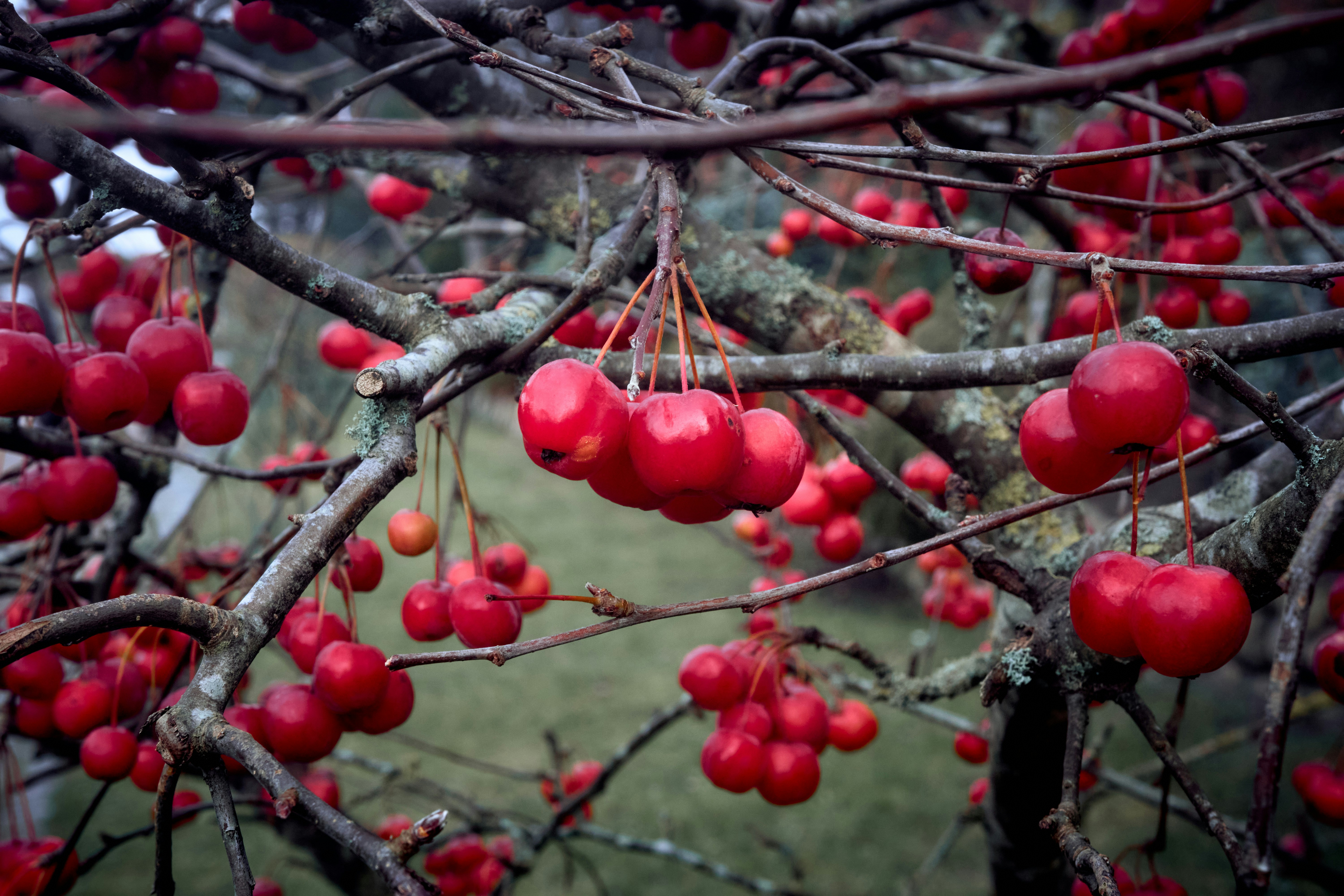
Crabapple
Malus
Start crabapple indoors 10 weeks before your last spring frost, then plant out around your last spring frost. Space plants 180 in (457 cm) apart.
Photo: paws and prints on Unsplash, Unsplash License · source
When to plant
Timed from your frost dates, so it holds wherever you garden. Give yours and every step below becomes a date.
Seed Start for Rootstock/Breeding
From seedRecommended from seed- Start indoors10 weeks before your last spring frost
- Begin hardening off10 days before your last spring frost
- Plant outaround your last spring frost
- First harvestfall; the first crop about 3 years after planting
Optimal Dormant Tree Planting
TreeRecommended tree- Plant out4 weeks before your last spring frost
- First harvestfall; the first crop about 3 years after planting
Growing crabapple
- Spacing in the row
- 180 in (457 cm)
- Between rows
- 240 in (610 cm)
- Planting depth
- Not applicable for trees (plant at nursery depth)
- Sun
- Full Sun
- Soil
- Well-drained loam, rich in organic matter. Optimal pH 6.0-7.0.
- Germination
- 30-60 days (for seeds, post-stratification) at 40-50°F (for seeds, post-stratification)
- Harvest season
- Fall
- Years to first crop
- 3
- Mature height
- 6-25 feet (by cultivar)
- Support
- Stake young trees
- Hardy to
- USDA zone 3
- Life cycle
- Perennial
Best grown from grafted nursery stock. Seeds require cold stratification and produce variable fruit.
Watering. Provide deep, infrequent watering, especially during establishment and dry periods. Avoid waterlogging.
Neighbours
The companion chart →Grows well beside
 Chive
 Nasturtium
- Dandelion
- Marigold · all kinds
- Comfrey
 Garlic
Strawberry
Keep apart from
- Walnut
 Fennel
Feeding
- Growing
- Apply a balanced fertilizer (e.g., 10-10-10) in early spring for young trees. Consult soil test for established trees.
- Flowering and fruiting
- Boron application may aid fruit set if soil test indicates deficiency.
- How often
- Once a year, in early spring, for established trees. Young, developing trees may need lighter feeds more often.
- Note
- Avoid excessive nitrogen, which promotes vegetative growth over fruit production.
Your crabapple, planned to the day.
Canopy turns these timings into dates from your own frost data, places every plant at its spacing on your garden map, and tracks it all the way to harvest.